



Categories
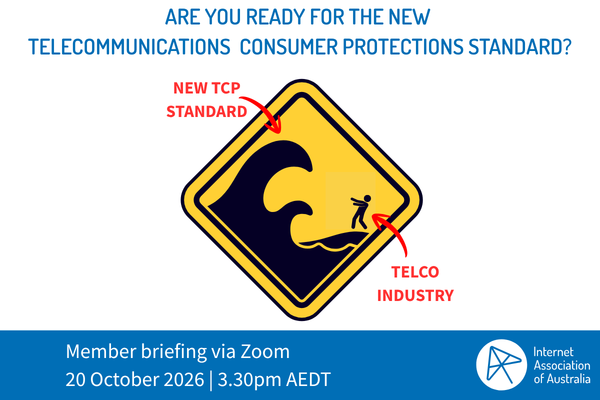
From selling services to collecting payments and rewarding staff, ACMA’s proposed telecommunications consumer protection rules will mean significant changes across your business.
IAA is holding a Member briefing to explain the proposals, answer questions, and collect feedback to inform our response to ACMA.
The draft Telecommunications (Consumer Protections) Industry Standard 2026 is set to replace the current TCP Code with directly enforceable requirements. Proposed changes cover:
- Critical Information Summaries and information provided to customers.
- Selling practices, sales incentives, and remedies for vulnerable consumers.
- Credit assessment thresholds and affordability checks.
- Payment flexibility and steps required before restricting, suspending, or disconnecting services.
- Staff training, senior executive accountability, and mis-selling reporting.
- Processes for appointing authorised representatives and advocates.
Now is the time to raise practical concerns about what these requirements would mean for your business. Join the discussion to help identify where the proposed Standard needs to change and what Members would need to implement it.
Date: Tuesday, 20 October 2026
Time: 3:30–5:00 pm AEDT
Location: Online via Zoom
Attendance: IAA Members
Members can register now, through the IAA Member Portal:
We’ll send further information ahead of the session to help you prepare. Whether you already have concerns or are still getting across the proposals, your feedback will help shape IAA’s submission.
The consultation closes on 10 November 2026. Read the consultation documents on the ACMA website.
Not an IAA Member?
Access to regulatory briefings, guidance, and opportunities to contribute to our advocacy are among the benefits of membership. Find out about joining IAA.
Questions? Contact policy@internet.asn.au.
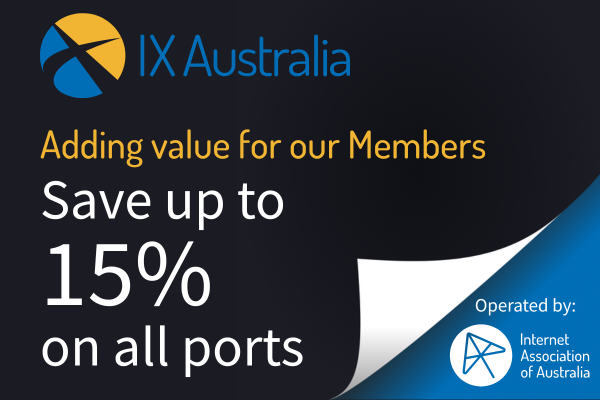
Our new IX Australia port pricing is now available, giving Members better value and more choice across every stage of their growth.
Members with existing 100 Gbps and 400 Gbps ports are already enjoying lower month-to-month prices from this month. There is nothing you need to do to receive the new rate.
We have also introduced a new 25 Gbps port option after lab testing and validation of the technology, to give our Members even more choice.
Our flexible month-to-month option remains available across all port sizes but Members who are ready to make a longer-term commitment can save even more:
- Save 5% with a 12-month term
- Save 10% with a 24-month term
- Save 15% with a 36-month term
| Port size | Month-to-month | 12-month term | 24-month term | 36-month term |
| 10G | $350 | $332.50 | $315 | $297.50 |
| 25G | $450 | $427.50 | $405 | $382.50 |
| 100G | $950 | $902.50 | $855 | $807.50 |
| 400G | $2,800 | $2,660 | $2,520 | $2,380 |
All prices are per month.
Whether you want to add a new port, move to a different port size, or take advantage of longer-term pricing, you can review your options now through the Member Portal.
If you would like to discuss which option best suits your network, contact our team at admin@internet.asn.au.

Members can now order longer-term port contracts and make other changes to your services, directly through the IAA Member Portal.
Choose a 12, 24, or 36-month contract when ordering your port and save 5%, 10%, or 15% on the month-to-month price.
Log in to the Portal to review your services and explore the new longer-term options available now.
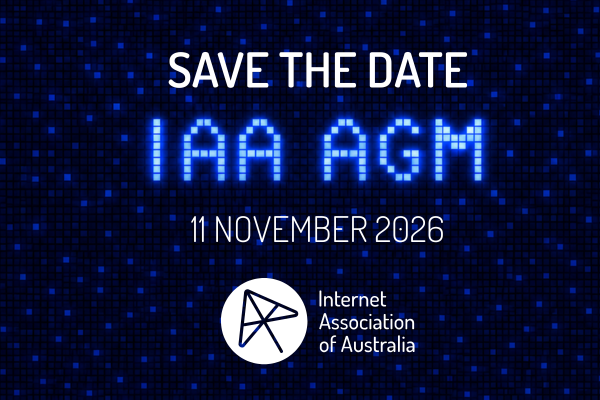
Attention IAA Members! Please save the date for IAA’s Annual General Meeting 2026.
Date: Wednesday, 11 November 2026
Time: 11:30am AWST/2:30pm AEDT
Location: Via Zoom
We will share the official notifications, nominations, reports, and registrations soon.
Please make sure that your contact details, including your voting contact are up to date in the IAA Member Portal.
We hope you can join us!
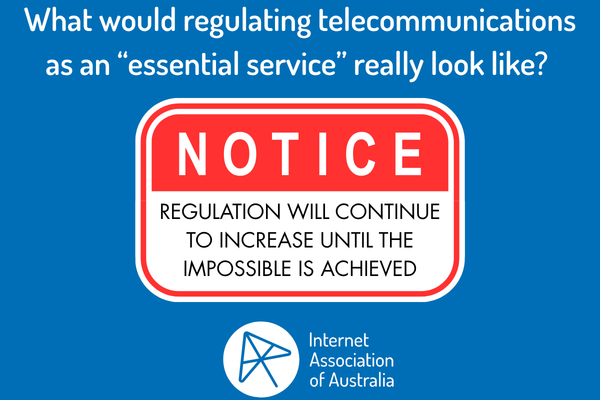
Over recent times we’ve been hearing increasingly strident demands to legislate and regulate telecommunications as an essential service, coupled with the claim that current regulation has failed.
One of the reasons given for this failure is the assertion that telecommunications is currently “self-regulated” and that industry “wrote its own rules”. Neither of these assertions is true. The Australian system of telecommunications regulation is a co-regulatory one, meaning that the relevant regulators, industry and consumer representatives determine and write the rules. Any code is subject to extensive stakeholder consultation, and only registered – if seen fit – by the sector regulator, the ACMA. It is not industry deciding what it can and can’t do for itself.
However, the benefit of co-regulation has always been that regulation has been developed by people who have the technical and operational expertise in telecommunications networks to ensure safeguards are feasible and practicable. Whether it be co-regulation or direct regulation, at the end of the day, it needs to be actually possible for the rules to be implemented. This system is not perfect, but it has meant over its lifetime that rules for selling, credit management, number portability, equipment labelling, and more, have been debated, rules agreed and penalties applied.
Now, however, a key component of that system has been abandoned and the most prominent regulator of the sector – the ACMA – is writing a new set of rules to apply. But believing we can regulate our way out of the problem doesn’t reflect reality.
If telecommunications is essential, we need to have a serious discussion about what that actually means. “Essential services”, under Australian law, include water, gas and electricity and are legislated for by State governments. Telecommunications falls under Federal law, a system which currently has no clear essential services legislation.
Telecommunications is also merely a conduit for communication – it isn’t the actual services people miss when networks go down. Enforceable performance guarantees for telecommunications networks won’t guarantee you can make that bank payment online, order your restaurant meal, or lodge your tax return. These latter services are provided independently of the networks – whether they be fixed, mobile or satellite – and if it is those services which are the genuinely essential components, then those enforceable performance standards need to be applied end to end.
When we try to compare telecommunications and internet services provision to the supply of gas, water and electricity we face a range of difficulties. These three systems have an excellent set of basic physical properties, coupled with standardised plugs and outlets which are far less complex than the suite of software applications, internet protocols, network technologies and the array of handsets, laptops and devices that connect across them. If my household water fails due to the plumbing in my kitchen, I don’t blame the water provider, yet the “telco” is almost always seen as to blame when people can’t search online.
Legislation cannot change physics.
We also know roughly how much water needs to be supplied to an average sized human to keep them alive, and can mandate that provision, and bring a tank of it when pipes fail. Even at the most basic level, were we to consider regulating mobile network performance, this would be akin to legislating that the lightbulbs on streetlights make everything visible no matter what the terrain, weather conditions, time of day, or dust and smoke levels are. Legislation cannot change physics. Even more absurd is the estimation of how much internet is required to keep the average human functioning. Is it 10 megabytes of Facebook, 20 megabytes of myGov, 2 megabytes of a bank and 8 megabytes of the ABC per day? Plus an allowance for telehealth and education? We certainly can’t bring you a disk drive full of content in lieu of a water tank.
It is also claimed that more regulation and heavier fines are needed because “people don’t trust telcos”. The significant number of Australians walking around without any hard cash or physical credit cards, would indicate they actually do trust the networks, despite the evidence that technological services are inherently imperfect.
Telecommunications and internet access have never been cheaper to buy nor more reliable than they are today. Perhaps what is needed is more clarity in how and who is responsible for its delivery, and better incentives to do this well. More regulation, particularly that codified by bureaucrats and politicians, no matter how well intended, is likely only to add to the cost and complexity of delivering these services.
by Narelle Clark
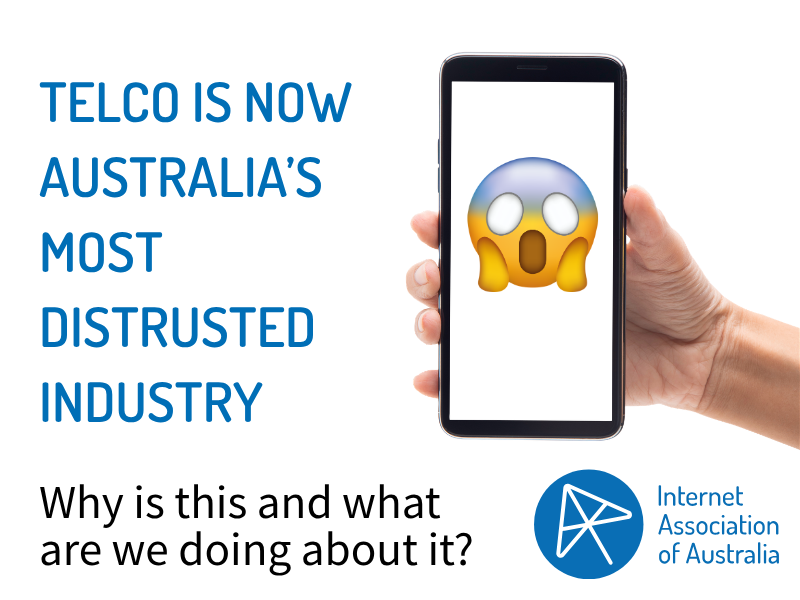
IAA was proud to attend and present at another insightful CommsDay Summit.
The Summit spanned two and a half days, opening with a pre-Summit forum on ‘Restoring Telecommunications Reputation’. This theme proved incredibly timely and resonated throughout the rest of the conference.
Indeed, the telecommunications sector has come under significant heat over recent years. Major network outages, including outages affecting the Triple Zero network, alongside a high-profile data breach and unconscionable mis-selling scandals have culminated in telecommunications becoming Australia’s most distrusted sector, according to Roy Morgan Research.
Speaking at the pre-summit forum, Roy Morgan’s CEO, Michele Levine punctuated distrust as not merely being the absence of trust. Rather, it is an active negative feeling directed at a brand, which is significant in its destructive capacity and therefore, industry must now respond.
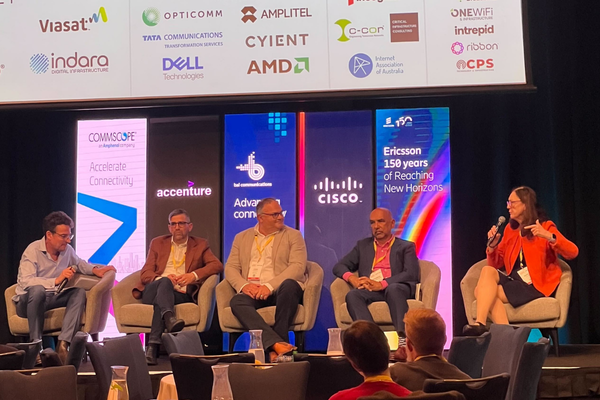
To our credit as a sector, there was genuine accountability in the room. Industry representatives acknowledged the role that these successive failures have played in eroding public confidence, while also making an important observation: the public sentiment reflects just how important telecommunications has become to everyday life.
This in turn presents an opportunity for the sector to improve and rebuild trust.
The conference highlighted some of the great initiatives already being undertaken. A key example being the Australian-first, National Telecom Resilience Centre (NTRC), run out of the University of Technology, Sydney. As presented by NTRC’s director, Professor Ray Owen commended some stakeholders, including key competitor telcos, for coming together to vastly improve the reliability and resilience of Australia’s Triple Zero network – and emergency calling worldwide – through its interoperability and validation testing systems. However, there is clearly more to be done.
Unsurprisingly in a summit focusing on trust, AI cropped up as a popular topic. Presentations spanned:
- AI sovereignty as foundational to trust
- Use of AI for network optimisation and diagnostics, to ultimately drive better customer experience
- Policy and regulatory settings and frameworks for AI
- Telecommunications as being the critical backbone for AI evolution
Overall, there was broad consensus that while AI is sure to revolutionise the sector to bring about real benefits for industry and customers alike, we must ensure sovereignty and proper guardrails for AI to be deployed in a way that builds trust and confidence in the industry.
Against this backdrop, IAA’s CEO Narelle Clark took to the stage three times.
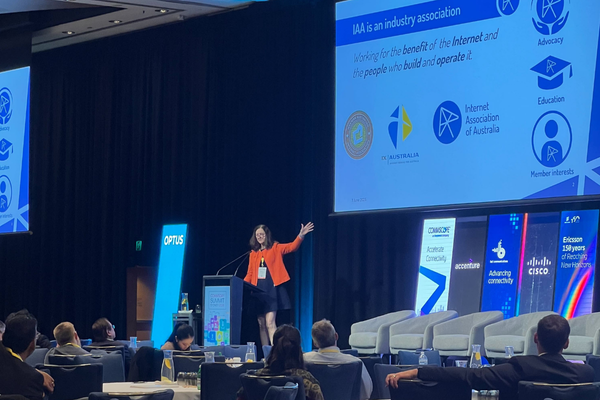
In her speech during the pre-Summit Forum, she highlighted the widening expectation gap between what consumers reasonably want, and what telcos can realistically, technically and commercially deliver. The current regulatory framework and approach to addressing the issues that have caused distrust have failed to close that gap and will only make it worse. Especially as disproportionate regulatory burdens are placed on smaller providers despite the evidence that the failures driving public distrust have primarily come from the largest players.
Narelle called for a root and branch regulatory review, including a serious conversation of what it means to legislate telecommunications as an essential service, instead of continuing with the complex and duplicative piecemeal approach that attempts to treat it as one.
She also called for engineers to be empowered to speak publicly about the extraordinary work going into building resilient and reliable networks, including sharing outage reports where they occur, and the remediation efforts to make sure these issues don’t re-occur. There needs to be increased uptake of technologies that improve security and trust, such as RPKI, and more of industry should participate in and support industry associations.
During her lightning talk, Narelle made a case for IXPs as vital infrastructure that can improve network reliability, speed and cost-efficiency – and therefore, ultimately, trustworthiness.
In her contributions to the ‘Great Debate Panel’ which tackled the pressures on the future of the telecommunications sector (again, heavily focused on AI), Narelle noted that while traffic strain is not new, AI’s scale and pace will significantly intensify this strain, while also raising new security implications. The message echoed by the panellists was that Australia needs a coherent and long-term telecommunications policy vision in the face of this development and uncertain future. Narelle’s ask to the Minister for Communications was, ‘just talk to us’.
Looking ahead, these discussions were incredibly timely. With the ACMA announcing on the Summit stage that the replacement draft industry standard for the Telecommunications Consumer Protections Code will be released for consultation in the coming weeks, there is significant regulatory reform facing the sector.
Thank you to Grahame and the CommsDay team for another insightful conference. The conversations and insights shared over the two and a half days are certainly on our mind as we prepare to advocate on behalf of our members for a regulatory environment that is fit for purpose and is conducive to improving trust in the telecommunications sector.
Report by Sophia Joo, Senior Policy Officer & Company Secretary