IAA was proud to attend and present at another insightful CommsDay Summit.
The Summit spanned two and a half days, opening with a pre-Summit forum on ‘Restoring Telecommunications Reputation’. This theme proved incredibly timely and resonated throughout the rest of the conference.
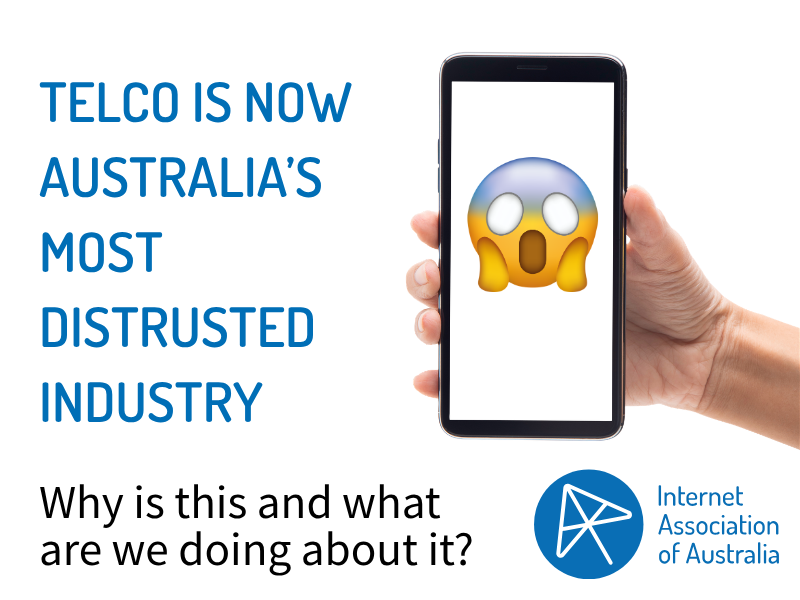
Indeed, the telecommunications sector has come under significant heat over recent years. Major network outages, including outages affecting the Triple Zero network, alongside a high-profile data breach and unconscionable mis-selling scandals have culminated in telecommunications becoming Australia’s most distrusted sector, according to Roy Morgan Research.
Speaking at the pre-summit forum, Roy Morgan’s CEO, Michele Levine punctuated distrust as not merely being the absence of trust. Rather, it is an active negative feeling directed at a brand, which is significant in its destructive capacity and therefore, industry must now respond.
To our credit as a sector, there was genuine accountability in the room. Industry representatives acknowledged the role that these successive failures have played in eroding public confidence, while also making an important observation: the public sentiment reflects just how important telecommunications has become to everyday life.
This in turn presents an opportunity for the sector to improve and rebuild trust.
The conference highlighted some of the great initiatives already being undertaken. A key example being the Australian-first, National Telecom Resilience Centre (NTRC), run out of the University of Technology, Sydney. As presented by NTRC’s director, Professor Ray Owen commended some stakeholders, including key competitor telcos, for coming together to vastly improve the reliability and resilience of Australia’s Triple Zero network – and emergency calling worldwide – through its interoperability and validation testing systems. However, there is clearly more to be done.
Unsurprisingly in a summit focusing on trust, AI cropped up as a popular topic. Presentations spanned:
- AI sovereignty as foundational to trust
- Use of AI for network optimisation and diagnostics, to ultimately drive better customer experience
- Policy and regulatory settings and frameworks for AI
- Telecommunications as being the critical backbone for AI evolution
Overall, there was broad consensus that while AI is sure to revolutionise the sector to bring about real benefits for industry and customers alike, we must ensure sovereignty and proper guardrails for AI to be deployed in a way that builds trust and confidence in the industry.
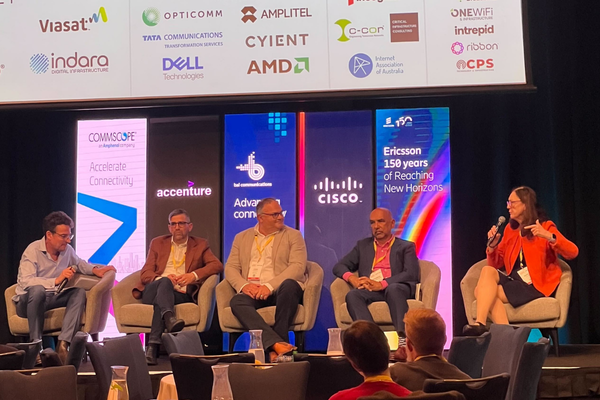
Against this backdrop, IAA’s CEO Narelle Clark took to the stage three times.
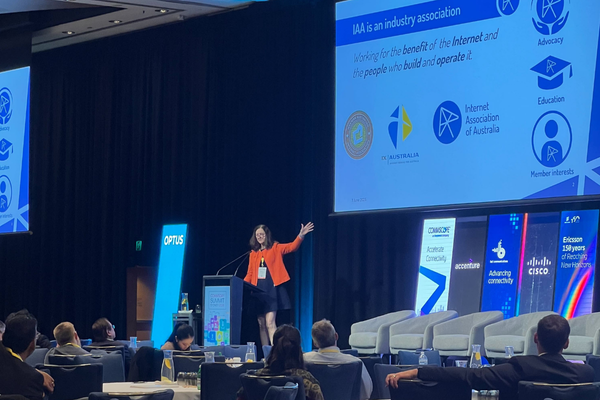
In her speech during the pre-Summit Forum, she highlighted the widening expectation gap between what consumers reasonably want, and what telcos can realistically, technically and commercially deliver. The current regulatory framework and approach to addressing the issues that have caused distrust have failed to close that gap and will only make it worse. Especially as disproportionate regulatory burdens are placed on smaller providers despite the evidence that the failures driving public distrust have primarily come from the largest players.
Narelle called for a root and branch regulatory review, including a serious conversation of what it means to legislate telecommunications as an essential service, instead of continuing with the complex and duplicative piecemeal approach that attempts to treat it as one.
She also called for engineers to be empowered to speak publicly about the extraordinary work going into building resilient and reliable networks, including sharing outage reports where they occur, and the remediation efforts to make sure these issues don’t re-occur. There needs to be increased uptake of technologies that improve security and trust, such as RPKI, and more of industry should participate in and support industry associations.
During her lightning talk, Narelle made a case for IXPs as vital infrastructure that can improve network reliability, speed and cost-efficiency – and therefore, ultimately, trustworthiness.
In her contributions to the ‘Great Debate Panel’ which tackled the pressures on the future of the telecommunications sector (again, heavily focused on AI), Narelle noted that while traffic strain is not new, AI’s scale and pace will significantly intensify this strain, while also raising new security implications. The message echoed by the panellists was that Australia needs a coherent and long-term telecommunications policy vision in the face of this development and uncertain future. Narelle’s ask to the Minister for Communications was, ‘just talk to us’.
Looking ahead, these discussions were incredibly timely. With the ACMA announcing on the Summit stage that the replacement draft industry standard for the Telecommunications Consumer Protections Code will be released for consultation in the coming weeks, there is significant regulatory reform facing the sector.
Thank you to Grahame and the CommsDay team for another insightful conference. The conversations and insights shared over the two and a half days are certainly on our mind as we prepare to advocate on behalf of our members for a regulatory environment that is fit for purpose and is conducive to improving trust in the telecommunications sector.
Report by Sophia Joo, Senior Policy Officer & Company Secretary