


Categories

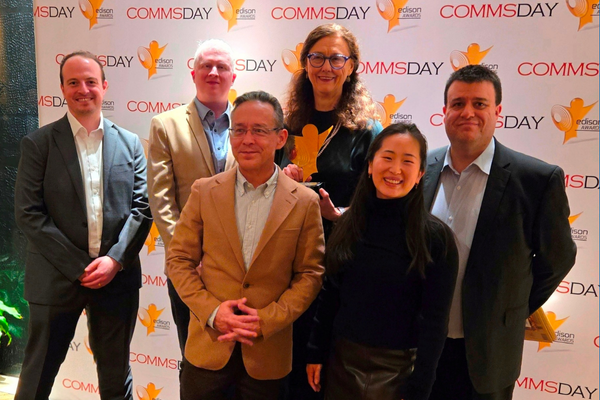
We’re proud to share that Narelle Clark, CEO of the Internet Association of Australia, has been officially inducted into the CommsDay Hall of Fame.

Announced at the 2025 CommsDay Summit in Sydney in June, this honour celebrates Narelle’s decades of impact across consumer advocacy, internet infrastructure, and policy. Her work has helped shape a more connected, inclusive, and resilient digital Australia.

As CEO of IAA, Narelle continues to lead with insight, integrity, and purpose championing a stronger, more community-focused internet for all.

Congratulations, Narelle a well-deserved recognition!

Telecommunications providers must act now to ensure compliance with the below major regulatory changes coming into force from as early as 30 June 2025:

  • Telecommunications (Consumer Complaints Handling) Industry Standard Amendment 2025 (No. 1) – Commencing 30 June 2025
  • Telecommunications (Customer Communications for Outages) Industry Standard Variation 2025 – Commencing 30 June 2025
  • Telecommunications (Domestic, Family and Sexual Violence Consumer Protections) Industry Standard 2025 – Commencing 1 July 2025

We have updated template packs provided on the IAA Member Portal to assist Members with their compliance obligations, but it is important Members understand new requirements arising from recent regulatory reform.

1. Expanded Complaints Handling Framework

From 30 June, telco providers will have to comply with new obligations in relation to handling complaints from consumers including:

  • New “Network Outage Complaint” Category:
    A new “network outage complaint” is now explicitly defined to align with the Telecommunications (Customer Communications for Outages) Industry Standard 2024. If a consumer reports loss of service and the provider suspects a network outage is occurring (either a major outage or significant local outage), the report must be treated as a formal network outage complaint
  • Network Outage Complaints Handling Process:
    Providers must establish a separate, documented process for handling network outage complaints and publish it on their website. IAA’s Template Complaints Handling Policy has been updated to include network outage complaints, and is available on the IAA Member Portal.
  • Resolution Standards for Network Outage Complaints:
    A network outage complaint is resolved once:
    • Service is restored, and
    • A bulk resolution offer (e.g. compensation or credit) is communicated (if offered)
  • Natural Disaster Exclusion:
    Complaints related to outages triggered solely by natural disasters may be handled through standard complaint processes instead.
  • Improved Accessibility:
    The ACMA have also introduced other changes unrelated to network outage complaints in relation to making complaints and complaints handling process more accessible. This includes, amongst other things, maintaining a direct link on the telco’s homepage and the help or support section of its website to display a list or table of each of the contact details the provider makes available to receive complaints, along with a statement that these contact points can be used to make a complaint.

2. Enhanced Communications During Outages

The Telecommunications (Customer Communications for Outages) Industry Standard has also been updated to introduce obligations in relation to ‘significant local outages’, which commence 30 June. Please note, obligations already exist in relation to ‘major outages’.

Variation Highlights:

  • New defined term – ‘significant local outages’
    ‘Significant local outage’ is defined as unplanned adverse impact to your telco network that results in an end-user unable to establish and maintain a carriage service which affects:
    • ≥1,000 SIOs in regional Australia for a period of over 6 hours;
    • ≥250 SIOs in remote Australia for a period of over 3 hours.
  • Notification obligations in relation to a significant local outage
    Carriers and CSPs must notify and communicate with select persons and groups at different stages including initial notification, regular updates, updates of material changes, and service restoration. IAA provides updated template kits including template notifications and communications that carriers and CSPs can send out in relation to both major outages and significant local outages in the IAA Member Portal.
  • Written Procedures
    Telcos must update their public-facing Network Outage Communications Policy to include their procedures in relation to a significant local outage. A template policy is also included in the Template Kit provided by IAA.

3. New Protections for Persons Affected by Domestic, Family & Sexual Violence

ACMA has introduced a new industry standard to establish protections for persons affected by domestic, family and sexual violence. While the Standard commences from 1 July, telcos will have a longer timeframe to comply with many of the requirements. Below are only the compliance requirements that begin from 1 July:

  • Reversal of service limitation for affected persons (s 13(3)-(5)):
    If a service has been limited (e.g. suspended or disconnected), and the affected person urgently requests reversal due to a DFV safety risk, the telco must urgently reverse it on first contact, or offer an equivalent service if reversal isn’t practical. However, reversal isn’t required where doing so would breach another Commonwealth law (e.g. emergency call service obligations).
    Must not require affected persons to engage with perpetrator (s 15(1)):
    Telcos must not require a person affected by DFV to contact or interact with the perpetrator of the DFV or the perpetrator’s authorised representative.
  • Information about support offered (s 16)
    Telcos must publish information on their website about the support they offer to people affected by domestic and family violence. If they don’t yet offer specific support, they must publish contact details for external support organisations and indicate when their own support services will become available.
  • DFV Policy (s 19-20)
    Telcos must develop and implement a domestic and family violence (DFV) policy, that is approved by the telco’s most senior executive, and develop supporting procedures that meet specific standards. Large providers have 6 months, and small providers 9 months from 1 July to comply.
  • General DFV Training (s 21)
    All personnel must receive DFV training, which can be delivered internally or via an expert 3rd party. Large providers have 9 months, and small providers 12 months from 1 July to complete training, with annual refreshers of the training to be completed.
  • Specialised DFV Training for Customer-Facing Staff (s 22)
    Personnel in customer service, or likely to deal with DFV issues must complete specialised DFV training which covers applying the telco’s DFV policy and procedures, nature of DFV and its relationship to telco services, how to identify affected persons, intersectionality and DFV, engaging with affected persons, and recognising and prioritising safety of affected persons and the safety of personnel engaging with perpetrators. The specialised DFV training can be tailored to the role of the personnel, and may be delivered internally or via an expert 3rd party. Large providers have 9 months, and small providers 12 months from 1 July to complete training, with annual refreshers of the training to be completed.
  • Consultation requirements (s 32)
    From 1 July, telcos must consult with and consider feedback from DFV support services and either people with lived experience or organisations representing at-risk groups when developing DFV policies and procedures (s 19), and training (s 21-22). Large providers must consult directly; small providers may do so via an industry body.

    A large provider means a provider with at least 30,000 SIOs, and a small prover is a provider with less than 30,000 SIO.

Please note, IAA is considering whether and how to undertake the consultation requirements on behalf of our members that fall under the ‘small provider’ category. If you are interested in being represented by IAA, please let us know by contacting policy@internet.asn.au.

What Telcos Must Do

Compliance Area

Required Actions

Complaints Handling (30 June)

Update processes and policies to handle and display network outage complaints separately.

Update website to specify points of contact to make complaints.

Ensure staff are trained to appropriately handle any network outage complaints as such.

Network Outage Communications (30 June)

Update internal processes to ensure communications are sent in relation to significant local outages.

Update public facing policy to include communications processes in relation to significant local outages.

DFSV Protections (1 July)

Ensuring staff understand all obligations that will commence from 1 July that relate to persons affected by DFV – e.g. not requiring affected persons to contact perpetrators, reversing service limitations.

Updating website to specify support information.

Undertaking consultation requirements to develop DFV Policy, procedures and training.

Training staff.

If you have any questions about the any of the new regulation, please contact us at policy@internet.asn.au.

Written by: Sophia Joo | Senior Policy Officer & Company Secretary

⚡️Network Engineers & Internet Peering Enthusiasts, let's talk about something fundamental yet often misunderstood!⚡️

When we talk about the power and efficiency of the Internet, we often highlight Internet Exchange Points (IXPs) as critical interconnection hubs. And they absolutely are! However, it’s crucial to remember that a typical Internet Exchange fabric is a pure Layer 2 construct.

What does that mean in practical terms?

An IXP does NOT perform any routing for or on behalf of its peering participants.

Think of it this way:

It’s a giant, shared Ethernet switch. Your router connects to it, and its sole purpose is to forward Ethernet frames between connected participants’ routers based on MAC addresses.

Each participant is responsible for their own routing decisions. The IXP itself only influences which routes you learn from their route servers, or advertise via their route servers, based on things like attached control communities and RPKI ROA validity. This doesn’t include so-called “bi-lateral” BGP sessions with peering partners directly across the exchange, which are entirely free of IXP influence!

No IP forwarding tables, no MPLS labels, no routing protocols running within the IXP’s core fabric for participant traffic. Most IXP’s operational networks will have their own underlay routing, but that’s distinct from the participant traffic plane.

Why is this understanding critical?

– Troubleshooting: If you’re experiencing routing issues with a peer at an IXP, your focus should be on your BGP configuration, your router’s health, and the peer’s BGP configuration – not on the IXP “routing” your traffic incorrectly.

– Architecture: IXP peering is decentralised by nature. You’re effectively building direct relationships with others, not relying on a central router.

– Security: An IXP isn’t inspecting or manipulating your IP packets beyond some basic ingress filtering of “nuisance” traffic, to ensure the health of the exchange. Ultimately, the exchange simply provides physical and data link layer connectivity between networks.

– Performance: The beauty of Layer 2 is its speed and simplicity. It allows direct, low-latency communication between networks, which is exactly what IXPs want to give peers!

Next time you connect to an IXP, remember you’re essentially plugging into a massive switchboard designed for efficient, direct peer-to-peer conversations, not a traffic cop directing everyone’s data.

Written by: Matthew Kobayashi | IAA Peering Engineer

Date: Thursday, 26 June 2025
Time: 5:30 PM – 9:00 PM AEST
Venue: Savile Row |  667 Ann St | Fortitude Valley | Brisbane

Join us for the IAA Convergent Brisbane social, where we’ll continue the celebrations with an exclusive evening of whisky tasting, delicious canapés, and fantastic company at Savile Row.

We invite you to commemorate three decades of building a fairer, more inclusive internet with us.

Event highlights:

  • A guided whisky-tasting experience featuring an impressive selection of spirits.
  • Delicious canapés paired with finely crafted cocktails.
  • An unforgettable evening of great company in the old-world charm of Savile Row.
Image of IAA's 30 Years of Peers time capsule calling for Members to help make history!

Contribute to the IAA Convergent Time Capsule

We’re calling on YOU – our network engineers, internet pioneers, and tech enthusiasts! Bring along your tech relics, or messages for the future to our 30 Years of Peer event in your city.

What to Contribute?
We’re looking for small items that will help capture the spirit of who we are today and the legacy we’re building for the future.

  • A piece of hardware or internet gear that tells a story
  • Some company merch that will evoke nostalgia
  • Photos from team events or handwritten notes predicting the future

Don’t miss your chance to leave your mark—join us and make history!

Let’s raise a glass to three decades of peering excellence – we can’t wait to see you there!

Secure your spot now, via the IAA Member Portal!

By RSVPing for this event, you are agreeing to comply with IAA’s Code of Conduct – Events.

Over the last month or so I’ve been able to catch up with a number of Members at our 30th anniversary events. If you can get to one over the next couple of months, please join us! I promise, however, that I will be asking about a range of issues as the information we get from our Members is the most potent fuel for our submissions to government.

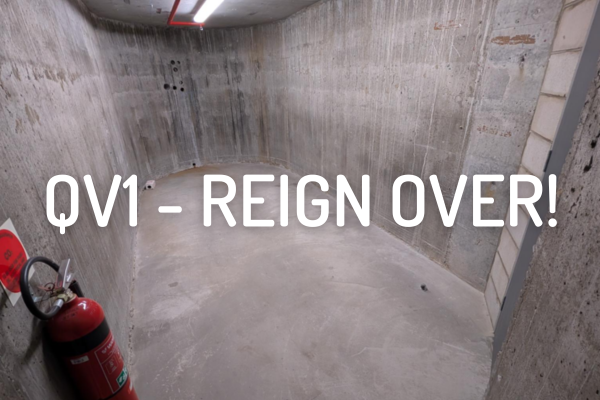
We have also been having fun tearing away the debris (literally) from QV1 as we decommission our original facility, upgrading the portal (and every switch the team can get their hands on), upgrading the website and more! Of course, we keenly listen to your feedback on that too. I hope you enjoy the articles below that cover more of the team’s amazing achievements.

As I write, the dust is barely settled on the federal election. With such an endorsement from the electorate, it is possible the Labor government will take the opportunity to open new policy avenues or push existing ones further. It leads me to wonder: should we re-think our expectations for the new government? What do we, as an association, want from the incoming government?

In the previous term of government, Labor sought to increase the level of regulation and update the approaches in security, consumer protection and privacy, with corresponding increases in penalties and paperwork. We worked actively to mitigate the heavy hand of regulation in our submissions and regulatory templates you can find on the Member Portal.

In the recent Cabinet reshuffle the previous Minister for Communications, Michelle Rowland, was promoted to Attorney-General and will be replaced by Anika Wells, who also retains her role as Minister for Sport. Minister Wells is new to the communications sector, with her appointment aligning with the government’s decision to move sport under the Infrastructure Department. It remains to be seen how the new Minister will approach this complex portfolio, and whether her dual responsibilities will allow for the depth of engagement the sector demands.

We continue to work hard to challenge lingering negative perceptions of our industry – dare I say prejudices – as we are often characterised as predatory and lax with privacy and security, therefore needing more regulation.

On the Opposition side, it is possible that the current inexperienced Communications spokesperson will stay, but probably more likely that a National Party person will take the portfolio given their higher proportion in the parliament. Again, their impressions won’t necessarily play positively towards our sector either, given the Nationals tend to see the whole industry as a problem with Telstra.

Happy peering!
Narelle
IAA CEO

Question from the desk

Each newsletter, I will pose a question to Members, because your perspective is important. Please email me with your thoughts and opinions. Over to you:

What do we, as an association, want from the incoming government?

Great news, Adelaide! After months in the pipeline, 100Gbps ports ane now available across all SA-IX Points of Presence, delivering the high capacity your users demand.

More capacity. More content.
Our latest upgrade will support the surge in traffic from major content sources like Steam, Netflix, Google, and more – keeping your users connected and content flowing smoothly.

There’s never been a better time to level up.

Order your port via the IAA Member Portal now:

You might have noticed something a little different – and in some cases some quirks – with your invoices this month. From 1 May 2025, IAA invoices began being sent directly from the IAA Member Portal as part of our ongoing plans to make our Portal the single source of truth for services and more streamlined overall.

Unfortunately, we set a higher default for the invoice settings and in many cases additional account holders received copies of invoices. We’ve now corrected that, so only your billing contacts will receive them in future. We appreciate your patience as we get the new system up and running.

We’ve addressed the issues behind the scenes, and things should be back on track for next month’s billing cycle. To be clear, our bank details and payment methods remain the same as usual.

If you have any questions or need a copy of your invoice, feel free to get in touch at accounts@internet.asn.au.

Got a location in mind for a new Point of Presence (PoP)? We’re proudly carrier and data centre neutral and always open to proposals from peers, suppliers, and data centres looking to improve connectivity for the benefit of all.

IAA does, however, have a minimum design and service standard for placement of a POP. It needs to have – at minimum – high grade redundant air conditioning, dual power feeds from diverse sources, secure racks in a secure facility, structured cabling facilities and multiple fibre providers via diverse paths to the site. Basically the site needs to be rated at Tier III or above, and we need evidence of member demand for its usage. This last point means that if Members ask for it, it can be so!

Help us expand our footprint to better serve your region and the wider network community. Propose a PoP and let’s explore the possibilities together.

The IAA Members Forum was held in May as an opportunity for Members to hear our news and share their views. 

The Forum began with a brief presentation from the team about the various IX upgrades, ongoing portal development, recent and future events, advocacy updates and governance news. 

You can watch this presentation via the IAA YouTube Channel and check out the slide deck in the links below.