
IAA Newsletters
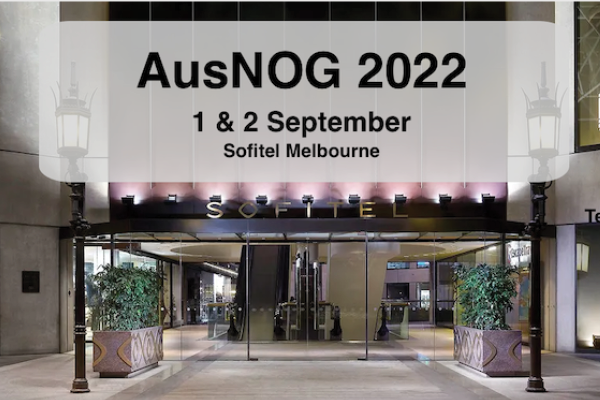
We’re back at AusNOG again this year with quite a few of our team attending, including some new faces for the booth to greet you all. We’ve got a new funky 90’s themed give away t-shirt, so be sure to stop by and say hello. We always enjoy catching up with members.
Read More

NBN Co is now working on the revised Standard Access Undertaking after withdrawing its previous SAU, which was met with industry-wide criticism in late July.
Its discussion paper released earlier this month is a lot more promising and includes a number of changes that which industry has been largely supportive of, notwithstanding remaining concerns on issues such as potential price rises, transparency surrounding NBN Co’s costs, and industry’s expectations for service standards commensurate to capex and thus increase in prices for RSPs.
The ACCC held an industry forum from 18-19 August to which IAA and various other industry representatives were invited. The forum allowed for open and frank discussions and was a great chance for industry to address remaining issues.
NBN Co hopes to release its revised SAU in late October. Submissions for its discussion paper outlining its proposed changes are due on 2 September.
Check out IAA’s media release in response to NBN Co’s SAU withdrawal in July, highlighting our position.
Read More

The recent activation of the Telecommunications Sector Security Instruments on 7 July came as a surprise to the public policy team. The unexpected commencement of new obligations took up much of our attention this month, attending industry debriefs and preparing material to assist members with compliance. We have also continued consulting with members to prepare our submission on the NBN Co Standard Access Undertaking (SAU).
Recent Submissions:
Proposed NBN Co SAU Variation | ACCC
Given the recent change in government, our submission addressed this as an opportunity to reassess NBN Co’s reason for existence and argued that the proposed SAU variation should be considered in this light. We emphasised the purpose of NBN Co is to provide high-quality, reliable and accessible broadband, rather than NBN Co’s seeming focus of not mere cost recovery but going beyond to make even more revenue. Thus, we recommended the ACCC not accept the proposed variation on the grounds that it does not promote the long-term interests of the end user, as well as negatively affecting RSPs.
Proposed Fees for Service 2022-23 | ACMA
We noted the significant increase in costs for a carrier licence application as well as charges for the telecommunications sector and requested further explanation and breakdown to justify any increase in ACMA’s fees.
Open Submissions:
Incorporating QR codes into the telecommunications labelling arrangements | 19 August 2022
ACMA is proposing to amend the Telecommunications Labelling Notice to include QR codes to align labelling requirements with those under the Radiocommunications Act. This is to provide consistency and flexibility for suppliers in the Australian market and enable suppliers to comply with the requirements.
ACMA has also identified three telecommunications technical standards that relate to outdated technology, or withdrawn industry standards, which they are also proposing to be repealed.
Read More

Late last week, professional members received a Professional Member Benefits survey. This survey is designed to help us improve your membership experience by enabling us to identify the member benefits that you want and need.
As a member-run association, we put our members at the heart of what we do. To help us make your association better, please complete the survey before it closes on Friday, 5 August 2022, 5:00pm AWST/7:00pm AEST. Don’t forget that all members who complete the survey will go into the draw to win an IAA swag bag.
Read More

This year’s Annual General Meeting (AGM) will be held in October and is planned to be slightly different to past years as the meeting is set to coincide with WA-IX’s 25th Birthday celebration. Official communications will start coming out in August, so please keep an eye on your emails, Facebook and LinkedIn to keep up to date with what’s happening.
This is also a good time to remind everyone to make sure you have updated your voting contacts! Please also check in with your organisation’s voting contact to ensure they receive all the important communications: if they have unsubscribed from our emails, your organisation might miss out on your voting instructions!
Read More

A quick reminder to members to submit your annual attestation of your compliance with the Telecommunications Consumer Protections (TCP) Code. Communications Compliance (CommCom) recently opened the TCP Code compliance attestation page for entries. Lodgements are due on 1 September 2022, and Carriage Service Providers who provide telecommunications services to consumers (as defined in the Code) are required to submit an annual attestation.
CommCom is an independent body responsible for overseeing the conduct of the Code Compliance Framework outlined in Chapter 10 of the TCP Code that also promotes compliance with the Code through industry guidance and educational initiatives.
Read More

A few months ago, one of our staff members caught up with Adrian Chadd, an eager lover of tech who assisted with the setup of WA-IX. 25 years on, Adrian has moved to California and now works for Facebook on a number of virtual reality and augmented reality prototype projects and continues to help with networking using his wide range of expertise.
Starting out in his first Internet job at PSINet, he met a lot of people, and as a young, enthusiastic type, he looked up to the entrepreneurs who built their own ISPs. He said, “I was the annoying little kid that was enthusiastic about learning”. He began with coding and admin work, then later moved into peering as it became more prominent, eventually being remote hands for smaller ISPs, and continued working in different roles on several projects and development work until he moved to California in 2011.
When asked about his recollection of the early days of WA-IX, Adrian recalled that some initially found it hard to connect to WA-IX as they were used to CCIEs and relied on staff who had the expertise to do it, but thanks to Adrian, along with a couple of others, they were able to get connected. He went on to talk further about the earlier days when ISPs weren’t working together, just purchasing upstream: “Although there were several attempts over East to make peering work that didn’t seem to take – eventually, Perth ISPs decided to do it themselves”. He also recounted the time he set up a 2Mbps wireless link between the Synet building in Subiaco and Paradox Digital in the Bank West building and remembers being on a ladder at the very top of the Bank West tower connecting a cable to the antenna… We’re really pleased you survived that one, Adrian!
He finished off by sharing his thoughts about WA-IX and peering in general, “I’m glad that peering in Australia is still a thing. That people in Australia take it seriously, and it has moved from commercial transit interest. It sort of seems like there is this side to peering that is fundamentally Australian ‘of getting shit done’. It all started in a cheap closet that turned into an Internet hub. Everyone connected, however, they could, some by fibre, some by ethernet [copper] or whatever they had on hand. It really all started with people getting connected any way they could to get shit done.”
Read More

On 7 July 2022, the security instruments, Telecommunications (Carrier License Conditions – Security Information) Declaration 2022 and the Telecommunications (Carriage Service Provider – Security Information) Determination 2022 (‘Telco Security Instruments’) came into force, activating new rules for carriers and carriage service providers.
In response to growing risks to the security and resilience of Australia’s critical infrastructure, the Security of Critical Infrastructure Act 2018 (SOCI Act) was amended in Dec 2021, introducing new obligations for a number of sectors, including the telecommunications sector.
In order to avoid regulatory duplication, some of the obligations will be introduced under the Telecommunications Act 1997 for the telecommunications sector, including mandatory reporting of cyber security incidents and lodging an asset register. The mandatory reporting obligations commenced 7 July 2022, and the asset register obligation will commence from 7 October.
We’ve prepared a whitepaper: Understanding Critical Infrastructure Obligations – Part One, IAA guidance to members on the: Telecommunications Sector Security Instruments – Cyber Security Incident Reporting, that seeks to guide members in understanding and complying with the cyber security incident reporting obligations under which significant and relevant cyber security incidents now must to be reported to the ACSC. We’ve also prepared a blog post providing commentary on the lack of meaningful engagement with industry in preparing us for the new regulations.