Categories

It’s official, Wednesday, 24 August 2022 at 9:00am AEST / 7:00am AWST is the launch date for phase one of the new IAA Member Portal. After more than 18 months of planning, designing, coding and testing, the new portal will be rolled out across three phases, with each phase containing new and upgraded features. 

Emails will be sent out to members giving important information on what to expect over the coming weeks. Members are reminded to keep an eye out for the important ‘Getting Started’ email coming on Wednesday, 10 August 2022, that will help make your transition to the new portal as easy as possible. 

We’re also planning to release some teaser videos on our social media channels, so stay tuned to catch a glimpse of what you have to look forward to! 

We’ve given our Services webpage a bit of a work over and given our technical peering information a page of its own. Thanks to member feedback, we have launched a new and improved Technical Guide on our website. This new page includes information on IX technical etiquette, allowed traffic types, BGP communities for controlling prefix propagation via the route servers and to our content caches, and much more. All members are encouraged to check out this new page, and as always, your feedback is appreciated. 

We are preparing to refresh our existing fleet of route server hardware. The new servers will use 2 x 10G-LR fibre links to diverse switches in a Layer 2 bonded configuration for improved resilience against planned and unplanned network outages. We look forward to giving you more information on the upcoming works, so stay tuned to our newsletters and socials. 

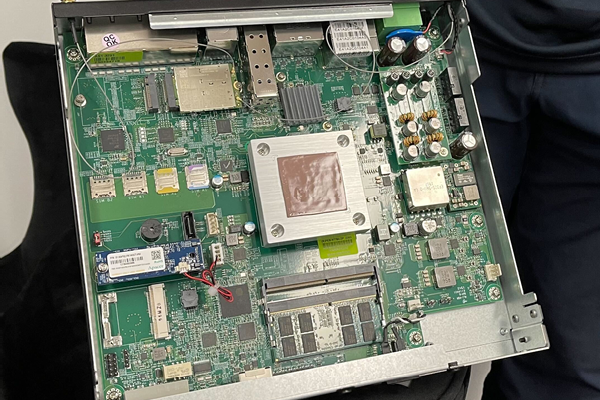
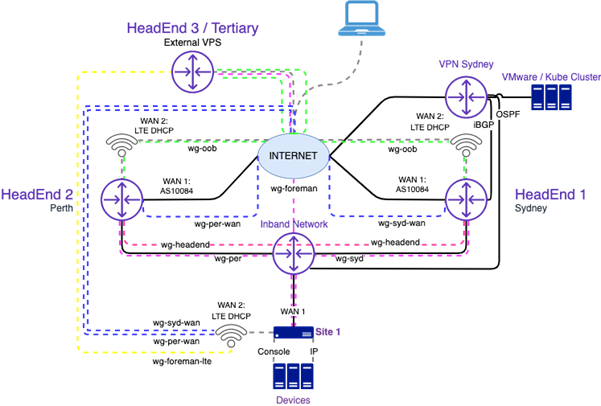
IX Australia’s new out-of-band (OOB) network has officially been commissioned and is now being used in production! Powered by ZPE’s NodeGrid devices and utilising state-of-the-art technologies such as WireGuard VPNs, this solution replaces the original OOB network that was running on end-of-life equipment. The new solution (high-level overview shown below) includes three redundant head-ends with LTE cellular connectivity, including one hosted completely external to our networks. This ensures access to all of our devices in the worst possible events, including those resulting in the direst of outages. The new network has already come in handy with a recent outage involving an OSPF process failure on one of our WA-IX switches – watch out for an upcoming blog post that will discuss this further. 

Well, here we are entering into a new financial year already. The team have been hard at work completing a few projects from last year, as well as the final phases of testing on our new member portal! It all looks so elegant and simple, it’s hard to see the huge amounts of effort that have gone into the layout, neat new calculators and extra functionality! That’s the secret of good design, really, isn’t it. We’re also just about to announce our new switch vendor to take our core to the next level: once again, all the hard work the team have put into avidly testing and configuring (not to mention deliberately misconfiguring) will yield us a significant extra capacity. Fingers crossed the supply chains will deliver before we do actually hit some ceilings. 

One surprise I did get this month, and not a pleasant one, was the announcement of new obligations for cyber security reporting. While we knew they were in the pipeline, we had expected a bit more discussion and even negotiation before they came into effect. Indeed, the message that these obligations were not coming into immediate effect was repeated by the Department of Home Affairs in their briefing to affected industries held on 30 June 2022. A week later, the Minister declared a new licence condition for carriers and carriage service providers to establish a mandatory reporting regime for cyber security incidents, with the federal government using provisions in the Telecommunications Act to bring the industry into line with other critical infrastructure sectors. Just when we thought there was a new Sheriff in town… Thankfully our team is on the ball, and you’ll see new guides on our web site to explain what you need to do. 

Happy new year everyone 

Narelle 

Join us as our panel of experts explore the requirements of lawful intercept within the Australian context and demonstrate an open source approach to meeting your obligations.  

During this online session, you will hear about the creation of the OpenLI project, ETSI lawful intercept standards and how they are implemented through OpenLI software, and hear from a leading network consultant as he shares his experience deploying OpenLI in ISPs.  

The session will conclude with an engaging discussion in which the panellists present their current unknowns about the Australian intercept landscape allowing attendees to share their unique intercept challenges.  

Lawful Intercept on the Cheap 
Date: Tuesday, 16 August 2022 
Time: 1:00pm – 2:00pm AEST / 11:00am – 12:00pm AWST 
Location: Online via Zoom  

Moderator
Narelle Clark – Internet Association of Australia Ltd
Narelle Clark is Chief Executive Officer of the Internet Association of Australia, a not-for-profit telecommunications carrier operating internet exchanges across Australia and New Zealand. Ms Clark has a broad technical and strategic view of Internet scale ICT delivery, having been a user, builder, operator and researcher of Internet networks through her extensive career with major telecommunications companies, research agencies and consumer bodies, as well as a leadership and governance background in the not-for-profit sector. She is an Honorary Fellow with the University of Wollongong and holds a seat on the board of the Public Interest Registry, which operates the .Org top-level domain. Ms Clark was also a Trustee of the global Internet Society from 2010-2016.

Panellists
Dave Mill – SearchLight Ltd
Dave Mill is a Network Consultant at SearchLight Ltd, but also cameos as the token figurehead and industry advocate for the OpenLI project.

Dave has worked in the NZ ISP industry for 20 years. For his main day-to-day role, Dave is a network consultant to ISPs and Enterprises, part of which includes the deployment of OpenLI. Dave has unique experiences to share from deploying intercept software in a variety of different ISPs with unique set-ups and requirements.

Richard Nelson – University of Waikato 
Richard has been a researcher in the networking area for 30 years and led the network research group (WAND) at the University of Waikato. He founded the OpenLI project with funding from NZ ISPs to develop the software. Richard has now left the University and is working on ensuring the longterm success of the OpenLI project, among other things.

Shane Alcock – University of Waikato 
Shane has been the lead developer of the OpenLI software since the project began in 2018. He has been a research programmer with the WAND network research group at the University of Waikato since 2005, specialising in writing open-source software to passively capture, analyse and understand Internet traffic. The software written by Shane is used by a number of highly renowned researchers in the Internet measurement field, including researchers at UCSD/CAIDA, Georgia Tech and ISI/USC. 

Sophia Joo – Internet Association of Australia Ltd 
Sophia Joo is IAA’s Policy Officer, responsible for everything that happens in the advocacy corner. Joining IAA in 2021, she brings previous experience as a paralegal for Yahoo Australia and further experience from an internship with the Environmental Defenders Office. Sophia has a Bachelor of Arts, majoring in Political Economy, and is awaiting to receive her degree in Bachelor of Law. She is currently completing her Graduate Diploma of Legal Practice to be admitted as a lawyer. 

Mark Parncutt – Australian Federal Police
Mark is the Officer-in-Charge, Surveillance Integration Delivery, with responsibility for the collection, processing and presentation of lawful intercepts at the AFP. He has a background as a software developer, systems administrator and digital forensic analyst in law enforcement for the past 7½ years and in the private sector prior to that. Mark is passionate about the difference that lawful intercepts make to law enforcement operations and has contributed to innovation in both technology and policy through inter-agency and industry forums.

Watch Now

 

How do ISPs meet their lawful intercept obligations? In this online session we will hear from Richard Nelson, Shane Alcock (Uni of Waikato) and Dave Mill (Searchlight), as well as IAA’s Sophia Joo, where they will explore the requirements of lawful intercept within the Australian context and demonstrate an open source approach to meeting your obligations. 

Date: Tuesday, 16 August 2022
Time: 1-2pm AEST / 11-12pm AWST
Location: Online via Zoom (registration opens 18 July) 

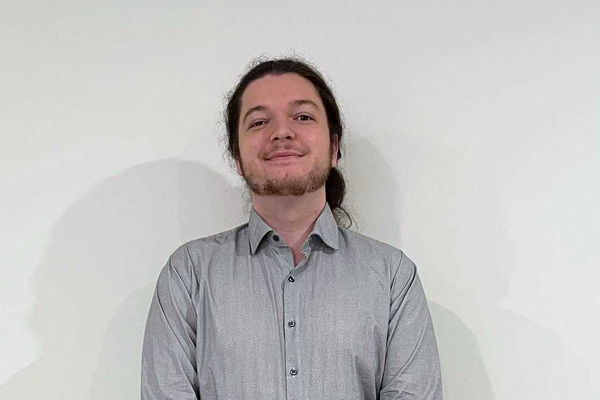
We are excited to introduce Kyle Zrinski, our new PHP Developer. Working with the tech team, he will be a vital contributor to our new IAA Member Portal.  

Before joining IAA, Kyle worked as a Desktop IT Support Technician and is currently completing a degree in Information Technology at ECU. 

Kyle brings a real passion for software development which is heavily integrated with the Internet, and is excited to move into the Internet industry, seeing it as an exceptional opportunity to learn and grow professionally.  

In his spare time, Kyle enjoys tinkering with hobby electronics and 3D printers, designing projects such as smart plant pots and logic puzzles – you may even find him tearing up the racetrack or working on cars!   

This month’s Meet the Member segment features our wonderful Deputy Chair, Brett O’Hara, who is employed as a Senior Network Engineer at Vocus in the Platform Engineering Group.  Brett joined IAA in 2019 after attending IAA events as a guest of a Corporate member to meet and network with people in the industry.  

Brett’s interest in the Internet industry was an extension of his early hobby: messing around with modems and other network gear. Working out how to exchange international email via UUCP locally rather than expensive international calls was a real thrill – he was lucky enough for this to then become a career! 

Throughout his career, Brett has achieved many things. From starting out in a dial-up ISP in the 90s that quickly evolved from PSTN to ISDN to Frame Relay, ATM and ever upwards. Moving from kilobits to megabits and then gigabits in just a few years. These days working at Vocus, he evaluates, selects and deploys new network platforms into their network, as well as manages new features and lifecycles on existing platforms to help Vocus stay on top of new and developing technologies.